
The OnLogic Blog: Edge Computing Articles & Insights
DEPEND ONLOGIC
Installing Fanless Computers: Important Dos and Don’ts
Fanless computers offer so many advantages including versatile mounting options, efficient power use, and enhanced reliability just to name a few.
APRIL 14 • 5 MIN READ
INDUSTRIAL IOT
Industrial Raspberry Pi: A Brief History and the Near Future
Intended to provide makers of all ages with a low-cost platform to learn the basics of coding, the first production Raspberry Pi was sold in 2012 for $30.
MARCH 31 • 4 MIN READ

What is OpenVINO and What are the Hardware Requirements?
Deep learning, a type of AI (artificial intelligence), is a subset of machine learning that focuses on teaching a computer to learn in a way similar to how a human brain would learn. To accomplish [read more]

How to Choose the Best Industrial Small Form Factor PC
A small form factor PC is specially designed to fit in space-constrained areas which may not accommodate a standard desktop PC. As technology advances, engineers have been able to push the boundaries of small computers [read more]

What is AI, or Everything you Wanted to Know About Artificial Intelligence (but were afraid to ask ChatGPT)
AI, short for ‘artificial intelligence’, is all the rage right now - you have probably heard about it on social media, in the news, and perhaps even in your latest binge television series. While the [read more]

TAA Compliance: What is it and why is it important?
TAA Compliance refers to products that meet the requirements of the United States Trade Agreements Act (TAA) of 1979. This Act applies to all (unless otherwise stated) General Services Administration (GSA) Schedule contracts and it [read more]

Formula Student: Full Speed Ahead with AI
Formula Student (FS) is an engineering competition in Europe that celebrated its 25th anniversary in 2023. The Institution of Mechanical Engineers sponsors the event to help develop skills in student engineers and encourage more young [read more]

Intel Platform Trust Technology (PTT): TPM For The Masses
In the last few years, Intel® Platform Trust Technology (PTT) has truly arrived. For years, the last word in securing personal computers, industrial PCs, and servers has been the Trusted Platform Module (TPM) specification. [read more]

What is OpenVINO and What are the Hardware Requirements?
Deep learning, a type of AI (artificial intelligence), is a subset of machine learning that focuses on teaching a computer to learn in a way similar to how a human brain would learn. To accomplish [read more]

How to Choose the Best Industrial Small Form Factor PC
A small form factor PC is specially designed to fit in space-constrained areas which may not accommodate a standard desktop PC. As technology advances, engineers have been able to push the boundaries of small computers [read more]

What is AI, or Everything you Wanted to Know About Artificial Intelligence (but were afraid to ask ChatGPT)
AI, short for ‘artificial intelligence’, is all the rage right now - you have probably heard about it on social media, in the news, and perhaps even in your latest binge television series. While the [read more]

TAA Compliance: What is it and why is it important?
TAA Compliance refers to products that meet the requirements of the United States Trade Agreements Act (TAA) of 1979. This Act applies to all (unless otherwise stated) General Services Administration (GSA) Schedule contracts and it [read more]

Formula Student: Full Speed Ahead with AI
Formula Student (FS) is an engineering competition in Europe that celebrated its 25th anniversary in 2023. The Institution of Mechanical Engineers sponsors the event to help develop skills in student engineers and encourage more young [read more]
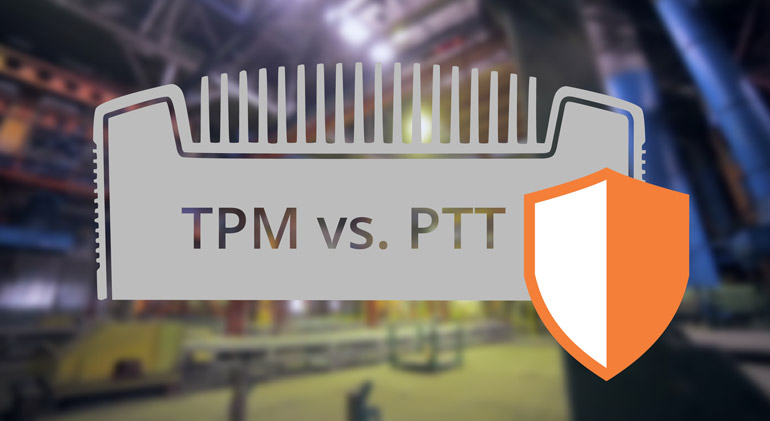
Intel Platform Trust Technology (PTT): TPM For The Masses
In the last few years, Intel® Platform Trust Technology (PTT) has truly arrived. For years, the last word in securing personal computers, industrial PCs, and servers has been the Trusted Platform Module (TPM) specification. [read more]
OnLogic Industrial PCs: Designed to last. Built to order. Delivered in days. Visit our online store at OnLogic.com
